
Aviation turbine fuel prices in Delhi were slashed by Rs 2,052 per kilolitre to Rs 27,106 per kl, effective midnight on Saturday, an official of Indian Oil Corporation, said. But for the one-off 3.3 per cent increase in rates on January 16, jet fuel prices are declining in tandem with the fall in international oil rates.
Natural rubber prices move in sympathy to Crude Oil prices, and the added firmness is due to fall in production in key producing countries.
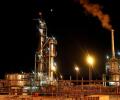
India was the world's biggest importer of Russian oil in February, exceeding China by 20 million barrels.
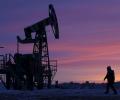
Indian refiners will buy less oil from Saudi Arabia next month as they snap up supplies outside of the Middle East as part of diversification drive amid weakening domestic fuel demand on the resurgence of COVID-19. State-owned Indian Oil Corporation (IOC) and three other refiners have sought just 65 per cent of the monthly average of about 15 million barrels from Saudi Arabia in May, three sources with knowledge of the matter said. The move follows tensions between India and Saudi Arabia over the Kingdom's hawkish stance on boosting production to cool prices.

US crude is now more than 17 per cent below its opening price at the start of the month and Brent is down more than 16 per cent.

Both crude benchmarks are now down around 20 per cent since their last peak in June
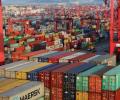
India's exports registered a steepest decline in 13-month falling 9.3 per cent in August to $34.71 billion due to global economic uncertainties, while the trade deficit soared to a 10-month of $29.65 billion. According to the government data released on Tuesday, imports increased by 3.3 per cent to $64.36 billion, which is a record high, due to a significant jump in the inbound shipments of gold and silver.

Wholesale price-based inflation rate fell to a 3-year low of (-) 3.48 per cent in May on easing prices of food, fuel and manufactured items, strengthening the case for continuing with the pause in rate hike in the coming months of the current fiscal. This is the second straight month when WPI has been in the negative zone mainly on account of a higher base and falling prices of fuel and manufactured goods. Food prices also eased during May. In May, 2022 WPI inflation was at 16.63 per cent. Last month, it was (-) 0.92 per cent.

ICICI Bank, HDFC Bank, IndusInd Bank down between 0.2%-1.4% each.
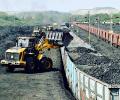
Exports of 19 major commodities, including petroleum products, coal and marine items, saw growth in terms of volume during April 2023-February 2024, even as they witnessed contraction in value terms during the same period. Government officials said the rise in export volume despite a decline in value implies that these commodities show a stronger market demand.

Inflation in food articles during June stood at 2.04 per cent, as against 1.13 per cent in May.

'Trump is good news for us. Energy poverty is real, and fossil fuels are the answer.'

Lower crude prices mean less government outlay for India,

While markets are upbeat over the government decision to nearly double the price of domestically produced natural gas, industry wants it to clearly lay the roadmap for free market pricing regime.

India is estimated to spend $1.36 billion more a year for every one dollar a barrel increase in crude oil prices, says Subhayan Chakraborty.
India is massively underexplored, says Rahul Shir, CEO, Cairn India.

The Indian services growth broadly steadied in May and was underpinned by healthy demand conditions, new client wins and greater staffing capacity, a monthly report said on Wednesday. The seasonally adjusted HSBC India Services PMI Business Activity Index was at 58.8 in May, marginally up from April's 58.7 and signalled another sharp rate of expansion.
State-owned oil companies are all set to hike petrol prices by around Rs 3 per litre which will be effective from midnight on Friday.

Wholesale price-based inflation remained in the negative territory for the fifth straight month in August at (-)0.52 per cent, but prices of food articles and fuel showed an uptick. The wholesale price index (WPI) based inflation rate has been in the negative since April and was (-)1.36 per cent in July. In August last year it was 12.48 per cent. Inflation in food articles remained in double digit at 10.60 per cent in August, lower than 14.25 per cent in July.

The country's chief statistician T C A Anant on Wednesday said high global crude prices could impact India's economic growth in 2011-12 and projected that the GDP is likely to grow by around 8.5 per cent during the fiscal.

ONGC was the top loser in the Sensex pack, cracking over 16 per cent, followed by Reliance Industries, IndusInd Bank, Tata Steel, TCS, SBI, ICICI Bank and Bajaj Auto.
Prices of petrol and diesel will not be reduced immediately as oil companies continue to make losses even after the recent fall in international oil prices, Petroleum Minister Murli Deora said on Wednesday.

The wholesale price-based inflation declined to 4.95 per cent in December 2022, mainly due to fall in prices of food articles and crude petroleum. The Wholesale Price Index (WPI)-based inflation was 5.85 per cent in November 2022 and 14.27 per cent in December 2021. Inflation in food articles was (-)1.25 per cent, while in fuel and power it was 18.09 per cent during December 2022.

State Bank of India (SBI), in a report on Friday, claimed a significant decline in the headline poverty ratio in rural areas on account of enhanced physical infrastructure, higher consumption growth in the bottom fractile and direct benefit transfers (DBTs).

Global fund managers witnessed one of their largest-ever declines in assets under custody (AUC) during the ongoing correction in the Indian markets, as stocks came under pressure from foreign outflows and the weakening rupee.

Indian basket at 6-month low of $49.11 a bbl

The total investment at risk is $930 billion and oil companies will need to cut their expenses by 30 per cent to make their projects viable provided oil remains around $70 a barrel.

After Reliance Industries Ltd and its partner bp plc of the UK, Nayara Energy - the nation's largest private fuel retailer - has started selling petrol and diesel at Re 1 less than the fuel sold by state-owned retailers, officials said. While state-owned Indian Oil Corporation (IOC), Bharat Petroleum Corporation Ltd (BPCL) and Hindustan Petroleum Corporation Ltd (HPCL) continue to hold prices despite a drop in international rates, private fuel retailers have started passing on the benefit to consumers. "To further stimulate domestic consumption and cater to local customers better, we have introduced a Re 1 discount in our retail outlets until the end of June 2023," a spokesperson for Nayara Energy said.
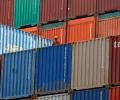
India's exports declined for the fourth month in a row in February to $36.91 billion due to volatility in petroleum prices and global uncertainties. The country's exports stood at $41.41 billion in the same month a year ago.

Every dollar increase in crude oil price will add Rs 4,000 crore to the overall underrecovery.

The rupee had lost 10 paise to close at 54.62 on Monday.

Global brokerage firm CLSA has reversed its early tactical shift from Indian equities to Chinese stocks, and has decided to raise India allocation while cutting exposure to China. In its report titled 'Pouncing Tiger, Prevaricating Dragon', CLSA cited challenges facing Chinese markets in the aftermath of Donald Trump's victory in the US elections as the reason for the move. "Misfortune can happen in threes. So it has played out for Chinese equities over the past week.
State-run fuel retailers are losing about Rs 135 crore (Rs 1.35 billion) per day on sale of petrol, diesel, LPG and kerosene and the government is looking at proposals to make up for these losses, a senior official said.

Oil and select auto heavyweights bore the brunt of selling pressure; ONGC, RIL, Tata Motors, M&M key losers.

'A positive oil shock has a detrimental effect on growth and activity.'

US shale oil would act as an alternative to India's heavy dependency on Russian crude, which is currently facing sanctions.
This is the third reduction in rates in one month.
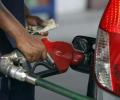
Petrol and diesel prices were hiked for the fourth consecutive day on Saturday by 35 paise per litre, pushing the total increase in rates on petrol to Rs 36 per litre and on diesel to Rs 26.58 since early May 2020 when taxes on the two fuels were raised to record levels. Petrol in Delhi now costs Rs 107.24 a litre and diesel comes for Rs 95.97, according to a price notification of state-owned fuel retailers. The latest increase that follows the unrelenting hike in international oil prices has pushed pump rates across the country to their highest-ever levels.

While India won't be immune to global spillovers, we need to create the macro preconditions for sustained growth. Policy agility, prudence, and resilience will be key, suggests Sonal Varma.
The fall in global oil prices has trimmed the losses of state-owned oil companies, but it may not be enough to prevent a Rs 4 per litre increase in diesel prices and a Rs 20-25 per cylinder hike in LPG rates later this month.
